
Banquet & wedding-dinner food
Chinese banquet dining, most visibly at weddings, follows its own distinct format — a set sequence of shared courses, many chosen deliberately for symbolic meaning rather than flavour alone.
The typical sequence
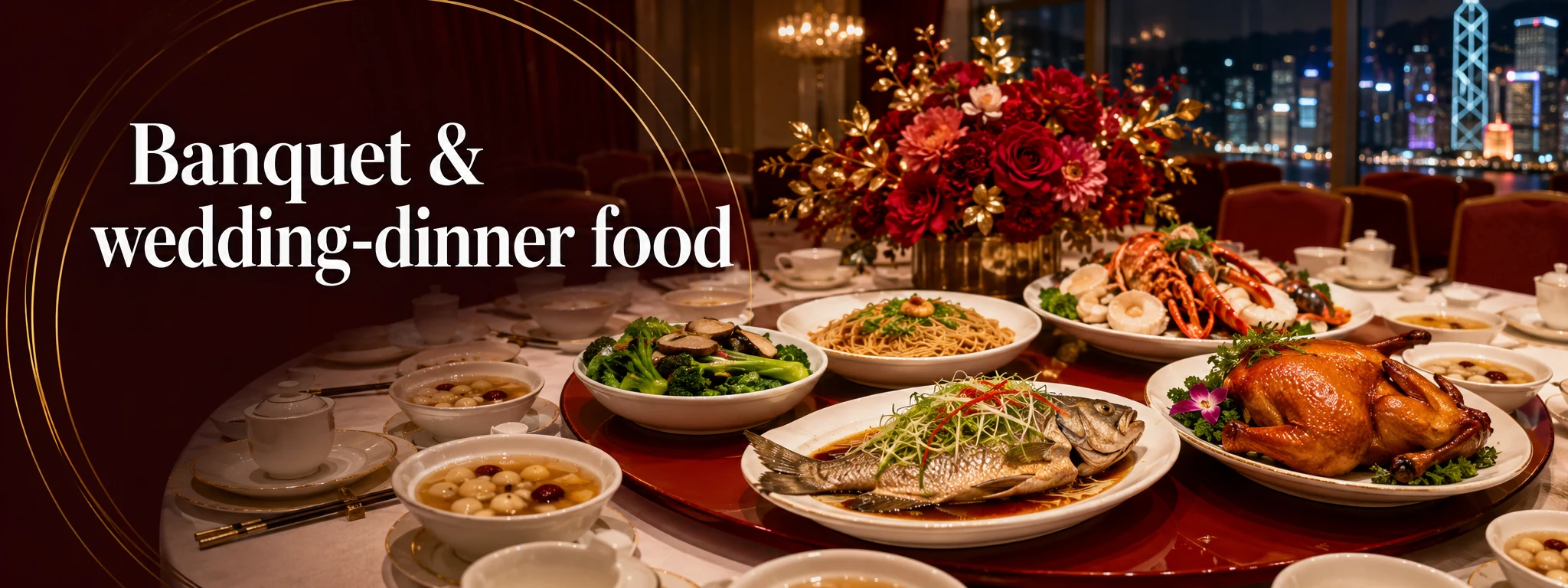
A banquet usually opens with a cold platter or roast meat course, moves through soup, seafood (often whole fish or lobster), a poultry dish, and a vegetable or tofu course, before finishing with rice or noodles and a sweet dessert soup — considerably more structured than everyday Cantonese dining.
Symbolic dishes
Whole fish is traditionally served for its association with abundance (echoing the number symbolism covered in our feng shui guide); noodles served uncut symbolise longevity; a whole roast suckling pig, when served, signals a particularly significant celebration.
Where this happens
Large Chinese restaurants with dedicated banquet halls, rather than everyday dim sum or cha chaan teng venues, host most weddings and formal celebrations — a genuinely different scale and format from the single-dish specialists covered elsewhere on this site.
As a visitor
You're unlikely to attend a wedding banquet unless personally invited, but the format shows up in miniature at some set-menu restaurant dinners — useful context if a restaurant offers a multi-course set rather than à la carte ordering.