Dim sum guide
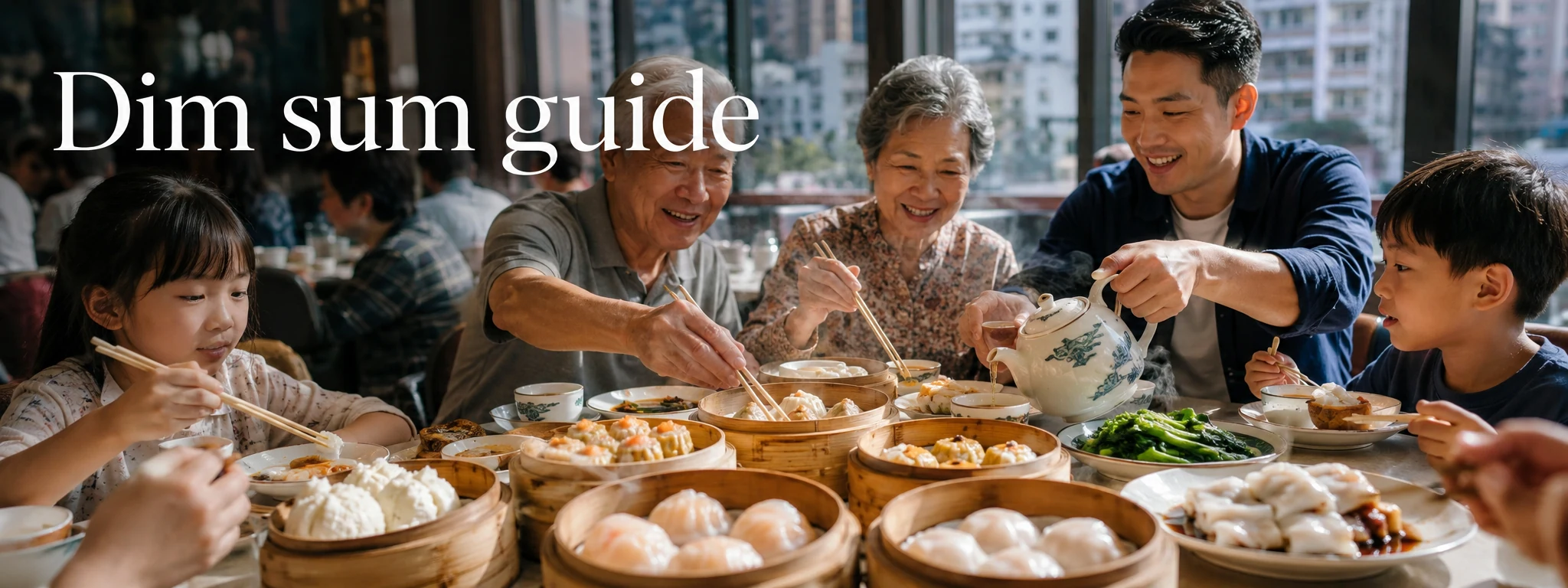
Dim sum is one of the easiest ways to experience Cantonese food as it is actually eaten in Hong Kong: several small dishes shared around a table with tea, usually in the morning or around lunch. The meal is commonly called yum cha — literally “drink tea” — and the point is as much conversation and sharing as it is collecting a list of famous dumplings.
Start with the format, not a checklist
For a first visit, order a mix of steamed, baked or fried dishes rather than six versions of the same dumpling. A sensible table for two might combine har gow, siu mai, char siu bao, cheung fun and one vegetable or rice dish, then add something sweet if you still have room. Portions are designed to share, so three or four people can taste more without over-ordering.
Five useful classics to recognise
- Har gow — translucent shrimp dumplings with delicate wrappers.
- Siu mai — open-topped pork and shrimp dumplings; recipes vary by kitchen.
- Char siu bao — barbecue-pork buns, usually steamed, though baked versions are common too.
- Cheung fun — soft rice-noodle rolls with fillings such as shrimp, beef or barbecue pork.
- Custard buns, sesame rolls or egg tarts — good shared finishes if you want something sweet.
How ordering works
The old image of trolleys circling a huge dining room is still real in some traditional places, but it is no longer the default everywhere. Many restaurants now use a paper order sheet, QR menu or standard menu. Do not reject a good restaurant because there is no trolley: the cooking matters more than the delivery system.
Tea comes first
You will usually choose tea before food. Common options include pu’er, jasmine and tieguanyin. If the list means nothing to you, simply ask for a house recommendation. Tea is continuously topped up, and the meal makes more sense if you treat it as part of the experience rather than a drink ordered on the side.
The teapot etiquette that actually helps
Pour for other people before yourself when practical. If the pot needs refilling, leaving the lid slightly ajar is a widely understood signal in many traditional restaurants, though asking a server is perfectly fine too. You may also see people tap two fingers on the table as a quiet thank-you when someone pours tea for them; it is a nice custom to recognise, not something visitors need to perform perfectly.
When to go
Yum cha historically leans toward breakfast and lunch. Some older restaurants start extremely early, while modern dim sum venues may serve through the afternoon or evening. If you want the most traditional rhythm, aim for morning or an early lunch. Weekends can be busy with family groups, so reservations are worth making at well-known restaurants.
Traditional halls, neighbourhood restaurants and modern dim sum
Hong Kong’s dim sum scene ranges from large banquet halls to tiny neighbourhood restaurants and polished modern venues. The Hong Kong Tourism Board highlights both old-school places and contemporary restaurants, so there is no single “authentic” room style. Decide whether you care most about atmosphere, convenience, price or a specific dish, then choose accordingly.
How much to order
The easiest first-timer mistake is ordering too much at once. Begin with roughly two to three baskets or plates per person if dishes are small, then add more. Dim sum is better when it arrives in waves and you can change direction after tasting. It also reduces waste and leaves room for dishes you notice on neighbouring tables.
Pork, shellfish and hidden ingredients
Dim sum is not automatically easy for vegetarians, people avoiding pork or travellers with shellfish allergies. Shrimp, pork, lard, oyster sauce and shared kitchen equipment are common. If a dietary restriction is medically important, use a clearly worded Cantonese or Chinese allergy card and confirm with staff rather than relying on appearance alone. Our vegetarian and vegan guide and halal-food guide cover alternatives in more detail.
What “yum cha” means for families
Dim sum can work very well with children because dishes arrive in small portions and there are mild options such as buns, rice rolls and congee. The challenge is the dining room rather than the food: busy halls can be noisy and tables close together. Families using a stroller should confirm lift access and table space when booking.
Where to build it into a day
For first-time visitors, dim sum is easy to pair with sightseeing rather than making a cross-city pilgrimage. Central and Sheung Wan work well before a harbour or heritage walk; Tsim Sha Tsui and Jordan fit naturally into a Kowloon day; Sham Shui Po is ideal if you want a more neighbourhood-focused food outing. See our Central, Kowloon.
Avoid the “famous dish” trap
There is no need to order every item you saw on social media. Some of the best meals come from mixing a few classics with one seasonal or house speciality. If a menu has photos or bilingual descriptions, use them; if it does not, point, ask and treat the uncertainty as part of the meal rather than a problem to solve.
Current official inspiration
The Hong Kong Tourism Board’s food and drink section is useful for finding current local-flavour venues and neighbourhood ideas. Venue details can change, so check the restaurant’s own latest opening and reservation information before travelling across town for one specific meal.